Location:


 Return to News
Written by Russell Hill
What Meat Sales Trends Are Telling Us About Shopper Behavior
For several years, much of the industry conversation around beef in retail, and the meat sales trends shaping it, has focused on premium programs. Branded offerings, eating quality, and product differentiation helped retailers tell a stronger story in the meat case.
Those programs still matter. But as consumer budgets tighten, another reality is becoming clear across the retailers we work with.
Shoppers are still buying beef.
They are simply moving differently within the meat case.
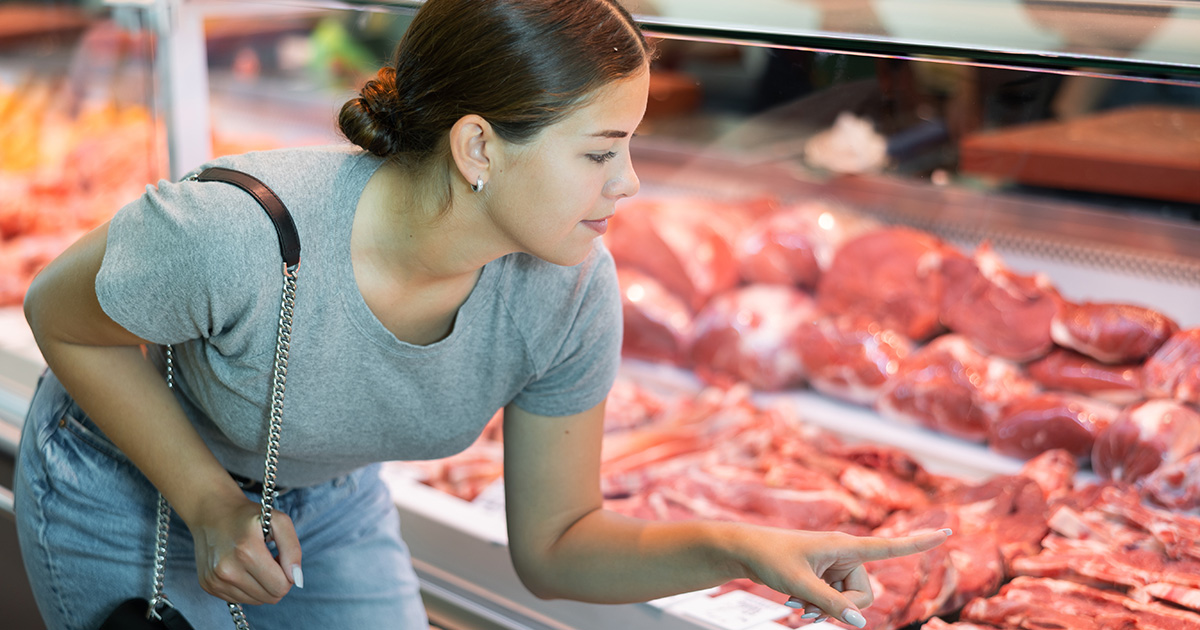
Recent insights from the Power of Meat 2026 Report highlight how actively consumers are managing grocery spending. About 50% of shoppers say they wait for sales or promotions when purchasing meat, while 34% report choosing cheaper cuts or ground meat to manage costs. At the same time, roughly 30% of total meat department volume is sold on promotion*.
None of this suggests consumers are leaving the category. In fact, the opposite appears to be happening. What we’re seeing is shoppers adjusting how they buy beef depending on the week, the occasion, or what is on promotion.
A family that might normally buy steaks may shift to ground beef for weekday meals. Another shopper may move from ribeye to sirloin. Others simply wait until a promotion creates the right price moment.
The important point is that the shopper is still in the meat case.
For retailers, the challenge we’re helping to navigate is maintaining that flexibility while protecting the overall performance of the category. A strong assortment allows shoppers to move between options without feeling forced out of beef altogether.
The retailers we’re seeing navigate this well are not abandoning premium programs. They are balancing them with accessible options that help consumers stay engaged with the category even when prices rise.
Promotions play an important role here as well. When used thoughtfully, they do more than move product. They help reinforce where value exists in the case and guide shoppers toward different cuts or meal solutions.
For suppliers, this shift highlights an important opportunity we’re actively working through with customers.
Retailers do not just need product. They need partners who understand how the meat case works during periods of price pressure.
That can mean helping retailers think about:
- cuts that deliver strong eating experience at lower price points
- promotional programs that drive store traffic while consistently delivering value
- consistent supply of high-velocity items like ground beef
- dependable programs that help retailers plan through volatile cycles
The meat category has always been resilient because it offers so many ways for shoppers to adapt. Consumers may trade down, trade across, or wait for the right price, but they rarely abandon protein altogether.
Retailers who recognize that behavior can design their assortment to support it, and we’re seeing that play out in the most resilient programs.
In that sense, the story unfolding in the meat department is not one of declining demand. It is one of movement within the category.
Retailers are not losing meat shoppers.
They are simply watching them trade down.
*Power of Meat 2026